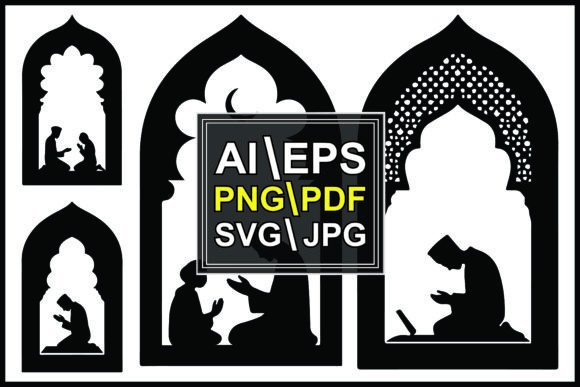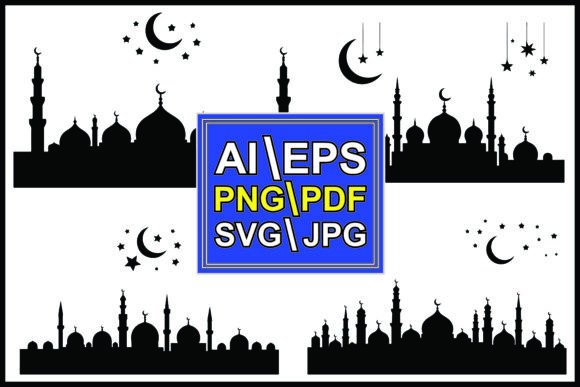
Mosque Skyline Silhouettes with Moons
The interplay of light and shadow has always been a powerful tool in visual storytelling, but few subjects capture the serene majesty of this contrast quite like Islamic architecture. A Silhouette of Mosque Skyline Moons Stars offers more than just a decorative element; it provides a timeless symbol of peace, spirituality, and cultural heritage. For designers, creators, and entrepreneurs, these minimalist outlines serve as versatile assets that can elevate a wide range of projects, from religious publications to modern urban branding.
What makes these silhouettes particularly compelling is their ability to convey complex architectural beauty through simplicity. The distinct curves of domes, the soaring verticality of minarets, and the delicate geometry of crescent moons and stars create a recognizable visual language. When rendered in black and white, these elements strip away distraction, allowing the viewer to focus on form, balance, and composition. This clarity is essential in today’s fast-paced digital landscape, where clean, impactful visuals often perform better than cluttered, overly detailed images.
The Artistic Power of Minimalist Architecture
Minimalism in design is not about emptiness; it is about emphasizing what matters. By reducing a bustling cityscape or a grand mosque to its essential outline, you invite the audience to fill in the details with their imagination. This abstract approach transforms a standard building into an icon. The horizon line becomes a stage, and the crescent moon and stars act as celestial anchors, grounding the structure in a specific time and mood—usually the tranquil quiet of night.
For graphic designers, working with vector-based silhouettes offers unparalleled flexibility. Unlike raster images that lose quality when scaled, vector files allow you to resize the skyline for a massive billboard or a tiny favicon without losing crispness. The clean lines of Islamic architecture are particularly well-suited for this medium. The repetitive patterns of arches and the smooth curvature of domes translate beautifully into digital paths, making them easy to manipulate, recolor, or integrate into larger compositions.
Creative Applications for Designers and Marketers
The versatility of a mosque skyline silhouette means it can be adapted for numerous industries and purposes. Here are several practical ways to incorporate these assets into your creative workflow:
- Ramadan and Eid Campaigns: During Islamic holy months, brands often seek imagery that reflects reverence and celebration. A silhouette featuring a prominent crescent moon and star against a dark background creates an immediate emotional connection. Use these graphics for social media headers, email newsletters, or packaging designs to signal cultural awareness and respect.
- Travel and Tourism Branding: For agencies promoting travel to historically rich regions, these silhouettes evoke a sense of place without relying on cliché photography. They can be used in brochure layouts, website banners, or luggage tags to suggest exotic destinations and architectural wonder.
- Editorial and Publishing: Book covers, especially for literature involving history, religion, or Middle Eastern cultures, benefit from the elegance of black and white outlines. The high contrast ensures readability of title text while providing a sophisticated backdrop.
- Interior Decor and Wall Art: The trend toward modern, monochromatic home decor makes these silhouettes ideal for printable art. Customers can print them on canvas, metal, or wood, creating striking focal points in living rooms or offices that blend traditional motifs with contemporary aesthetics.
Adapting Styles for Different Audiences
While the core subject remains the same, the presentation of a skyline silhouette can be tailored to suit different target audiences. Understanding your viewer’s preferences allows you to tweak the design for maximum impact.
For a modern, urban audience, consider isolating specific elements. Instead of a full panoramic view, focus on a single, intricate minaret or a cluster of domes. Pair this with bold, sans-serif typography and ample white space. This approach feels fresh, architectural, and aligned with contemporary design trends. It appeals to younger demographics who appreciate clean lines and abstract interpretations of traditional symbols.
Conversely, for a traditional or religious context, a more comprehensive skyline that includes multiple buildings, stars, and a prominent crescent moon may be more appropriate. This fuller composition conveys community, breadth, and the grandeur of the faith. Using these elements in invitation cards for weddings or religious ceremonies adds a layer of dignity and cultural authenticity. In these cases, maintaining the integrity of the architectural details is crucial to ensuring the design feels respectful and accurate.
Technical Considerations for High-Quality Results
To ensure your final products look professional, attention to technical detail is paramount. When working with a vector bundle, you have access to multiple file formats, each serving a specific purpose. Understanding when to use each format can streamline your workflow and improve output quality.
SVG and EPS files are your go-to choices for web design and scalable graphics. They remain sharp at any size and have small file sizes, which is beneficial for website loading speeds. If you are creating a logo or an icon for an app, these formats ensure clarity on high-resolution retina displays.
AI and PDF files are ideal for print production. Whether you are designing a large-format poster or a small business card, these formats preserve the vector data, allowing printers to reproduce the crisp edges of the silhouette without pixelation. Always check that your colors are set to CMYK for print jobs to avoid unexpected color shifts.
PNG and JPG files are useful for quick previews, social media posts, or situations where vector software is not available. However, remember that these are raster images. If you need to enlarge them significantly, they may become blurry. For best results, use the highest resolution versions provided in your download package.
Enhancing Visual Impact with Composition
Simply placing a silhouette on a background is rarely enough to create a memorable design. Consider how you can enhance the visual narrative through composition and layering. One effective technique is to play with contrast and depth. While the silhouette itself is flat, you can create an illusion of depth by layering multiple skyline elements with varying opacity or size. This mimics the atmospheric perspective seen in real landscapes, where distant objects appear lighter and less distinct.
Another approach is to integrate texture and pattern. Although the silhouette is solid black, the background can feature subtle geometric Islamic patterns, starry night skies, or gradient fades. This adds visual interest without overpowering the main subject. For digital backgrounds, a deep navy or charcoal gradient often works better than pure black, as it adds warmth and dimension to the night scene.
Typography placement is also critical. The horizontal nature of a skyline naturally divides the canvas, creating ideal zones for text. Placing titles above the horizon line or within the negative space of the sky ensures legibility. Avoid overlapping text with the intricate details of minarets or domes, as this can reduce readability and clutter the design.
Building a Cohesive Brand Identity
For businesses and content creators, consistency is key to building a recognizable brand. If you use a mosque skyline silhouette in one part of your marketing material, consider carrying that visual theme across other touchpoints. Use the same style of iconography on your website, social media profiles, and physical merchandise. This repetition reinforces brand identity and creates a cohesive user experience.
Furthermore, these assets can be customized to align with your brand colors. While black and white is classic, don’t hesitate to experiment with gold, teal, or deep purple accents to match your palette. The vector format makes recoloring effortless, allowing you to maintain the structural integrity of the design while adapting it to your specific visual guidelines.
Accessing and Utilizing Your Vector Bundle
When you acquire a professional design asset like this, ease of use is essential. Our collection is designed to be user-friendly and adaptable. You will receive a comprehensive zip folder containing all necessary formats: JPG, PNG, AI, EPS, SVG, and PDF. This variety ensures that whether you are a novice using basic editing tools or a professional designer working in Adobe Illustrator, you have the right file for the job.
Upon downloading, simply unzip the folder using software like WinZip or your operating system’s built-in extraction tool. You will find no watermarks and no restrictive backgrounds, giving you complete freedom to manipulate the files. You can isolate individual elements, combine them into new scenes, or use them as standalone pieces. The goal is to empower you to create without limitation.
If you encounter any issues or have specific customization needs, do not hesitate to reach out. We are committed to supporting your creative process and ensuring you get the most value from your purchase. Explore our store for more curated collections that blend cultural richness with modern design utility. Let these silhouettes inspire your next project, bringing a touch of elegance and meaning to your visual communications.