Strategic Design: Leveraging 20 Arabesque Vector Patterns for Brand Distinction
In the crowded landscape of digital and print media, visual identity is often the first point of contact between a brand and its audience. For designers, marketers, and business owners, the challenge lies not just in creating something beautiful, but in creating something that communicates heritage, precision, and elegance without overwhelming the core message. This is where the strategic application of 20 Arabesque Vector Patterns becomes a valuable asset. These are not merely decorative elements; they are tools for establishing tone, enhancing user experience, and differentiating products in a saturated market.
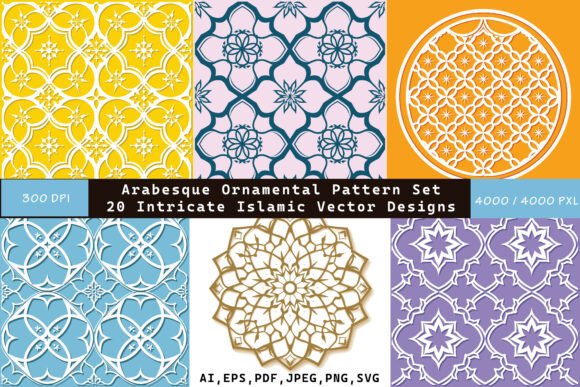
The collection features twenty distinct, high-resolution Islamic vector designs inspired by traditional Arabic tilework, Middle Eastern motifs, and intricate mosque geometry. Each pattern is constructed with elegant interlacing shapes, floral latticework, and decorative symmetry. However, the true value of this set lies in its versatility and technical robustness. Provided in high-resolution 300 DPI at 4000 × 4000 pixels, these assets are ready for immediate deployment across a wide spectrum of professional applications, from large-format printing to delicate digital interfaces.
The Strategic Value of Geometric Precision in Branding
Arabesque art is rooted in mathematical precision and infinite repetition, symbolizing the underlying order of the universe. When integrated into modern branding, these patterns convey a sense of stability, luxury, and cultural depth. Using 20 Arabesque Vector Patterns allows businesses to tap into these subconscious associations. For entrepreneurs and decision-makers, this means moving beyond generic stock imagery to utilize design elements that carry historical weight and aesthetic sophistication.
Consider the impact on customer experience. A luxury hospitality brand, for instance, might use these motifs on menu covers, room key cards, or website backgrounds to evoke an atmosphere of refined tranquility. The intricate details invite closer inspection, encouraging users to engage more deeply with the material. This is not passive decoration; it is an active component of brand storytelling. By selecting patterns that align with their brand values—such as symmetry for balance or floral latticework for growth—companies can reinforce their positioning through consistent visual language.
Practical Applications Across Industries
The utility of this ornamental pattern set extends far beyond traditional Islamic art projects. Its seamless and non-seamless motifs offer flexibility for various industries. Below are strategic ways to integrate these vectors into your workflow:
- Retail and Packaging: In the retail sector, packaging is a silent salesman. Applying these high-resolution patterns to product boxes, bags, or labels can elevate perceived value. The 300 DPI resolution ensures that even fine lines remain crisp on physical materials, preventing the pixelation that often plagues lower-quality assets.
- Digital Media and Web Design: For digital backgrounds, the SVG and PNG formats included in the set allow for scalable implementation. Designers can use these patterns as subtle overlays on landing pages or as textured backgrounds for social media campaigns, particularly during culturally significant periods like Ramadan and Eid.
- Publishing and Stationery: Publishers creating journals, planners, or scrapbooks can utilize these designs for chapter headers, page borders, or cover art. The intricate geometry provides a structured yet artistic framework that enhances readability while adding visual interest.
- Textile and Home Décor: Fabric printers and home décor manufacturers can leverage the seamless nature of specific patterns in this set to create continuous prints for upholstery, curtains, or apparel. The vector formats (AI, EPS) ensure that designs can be scaled to any size without loss of quality, a critical factor in textile production.
Technical Specifications and Workflow Efficiency
For professionals, time is a critical resource. The inclusion of multiple file formats—AI, EPS, PDF, JPEG, PNG, and SVG—within the 20 Arabesque Vector Patterns set streamlines the design process. Vector files (AI, EPS, SVG) are essential for scalability, allowing designers to resize elements for billboards or business cards without degradation. Raster files (JPEG, PNG) are optimized for quick web use and digital presentations.
The 4000 × 4000 pixel dimensions at 300 DPI provide a safety margin for high-quality print outputs. This technical specification reduces the need for additional upscaling or remediation, allowing creators to focus on composition and strategy rather than technical troubleshooting. For freelancers and agencies managing tight deadlines, this readiness translates directly into operational efficiency.
Decision-Making: When and How to Use These Patterns
While these patterns are versatile, their effectiveness depends on intentional application. Randomly overlaying intricate designs can lead to visual clutter, distracting from the primary message. Here are guidelines for thoughtful integration:
- Establish Hierarchy: Use arabesque patterns as secondary elements. They should support, not dominate, the primary content. For example, use a low-opacity version of a pattern as a background texture, ensuring text remains legible.
- Contextual Relevance: Consider the cultural and thematic context. These patterns are particularly effective for projects related to Middle Eastern culture, Islamic holidays, or brands emphasizing tradition and craftsmanship. Using them out of context may dilute their impact or appear incongruous.
- Color Strategy: Traditional arabesque designs often feature rich, earthy tones or metallic accents. Align the color palette of the patterns with your brand guidelines. Many vector files allow for easy color customization, enabling seamless integration into existing brand systems.
- Balance Complexity: Pair intricate patterns with ample white space. The complexity of the geometry requires breathing room to be appreciated. Overcrowding the design diminishes the elegance of the motifs.
Risks of Unintentional Design
Using decorative elements without a clear strategic goal can undermine brand credibility. One common risk is visual noise. If a pattern is too busy or clashes with typography, it creates cognitive load for the viewer, making it harder for them to process information. Another risk is cultural insensitivity. While these patterns are inspired by Islamic art, using them inappropriately or disrespectfully can alienate audiences. It is crucial to approach these designs with an understanding of their origins and significance.
Furthermore, relying solely on aesthetics without considering functionality can lead to poor user experience. For instance, using a high-contrast pattern behind text can reduce readability, affecting accessibility. Always test designs across different devices and mediums to ensure they perform well in real-world scenarios.
Long-Term Value and Asset Management
Investing in high-quality, versatile design assets like 20 Arabesque Vector Patterns offers long-term returns. Unlike trend-based graphics that may quickly become outdated, geometric and floral arabesque designs have timeless appeal. They can be reused across multiple campaigns and projects, providing consistency in brand identity over time.
For educators and content creators, these patterns can serve as teaching tools or illustrative aids in discussions about geometry, history, or art. Their detailed structure allows for close analysis, making them valuable resources for academic or educational materials.
Ultimately, the goal is to use these patterns intentionally. By understanding their technical capabilities and aesthetic potential, designers and business owners can make informed decisions that enhance their projects. Whether for Ramadan Eid stationery, corporate branding, or personal DIY crafts, the key is alignment with broader objectives.
Conclusion: Integrating Tradition with Modern Strategy
The 20 Arabesque Vector Patterns set represents more than a collection of images; it is a resource for strategic visual communication. By leveraging these high-resolution, versatile designs, professionals can create impactful, culturally resonant, and aesthetically pleasing materials. Success lies in thoughtful application—balancing beauty with function, tradition with innovation, and detail with clarity.
As you plan your next design project, consider how these ornamental patterns can support your goals. Are you aiming to convey luxury? Heritage? Precision? Let the geometry guide your strategy. And remember, if you encounter any issues downloading the files, support is available to ensure your workflow remains uninterrupted. Embrace the elegance of arabesque design, and let it elevate your creative outcomes.