Continuous Line Design of Meditation: A Visual Path to Mental Clarity
In a world that often feels fragmented, there is something profoundly soothing about an unbroken path. The Continuous Line Design of Meditation captures this sentiment perfectly. It is more than just an aesthetic choice; it is a visual representation of mindfulness, flow, and the uninterrupted nature of consciousness. When you look at a single line decorative element drawn on white, your eyes are invited to travel without interruption, mirroring the mental journey of meditation itself. This art form has found its way into modern homes, wellness centers, and digital spaces, offering a unique blend of simplicity and depth.
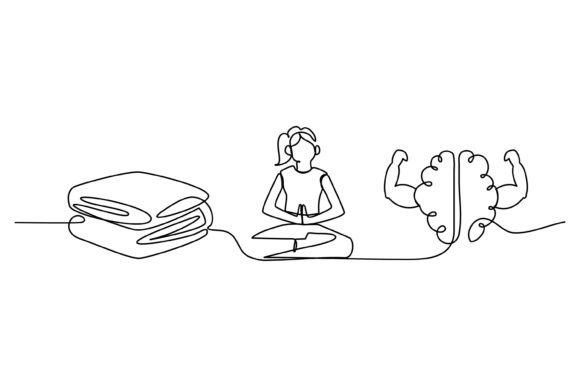
What makes this style so compelling is its accessibility. You do not need to be an art historian or a seasoned yogi to appreciate the calming effect of a continuous line. The design typically features a figure in a meditative pose, a lotus flower, or an abstract representation of energy, all created with one fluid stroke. This technique removes visual clutter, allowing the brain to rest. For many, owning a piece of this art—whether as a physical print or a digital asset—is a daily reminder to breathe, center, and reconnect.
Transforming Personal Spaces into Sanctuaries
The most immediate application of continuous line art is in interior design. Modern living spaces, especially in urban environments, can feel chaotic. We are surrounded by screens, notifications, and complex patterns. Introducing a single line decorative element drawn on white acts as a visual palate cleanser. It creates negative space that allows the eye to rest.
Consider the bedroom, a space dedicated to rest and recovery. Hanging a minimalist print of a meditating figure here can subtly shift the room’s energy. Unlike vibrant, high-energy artwork that stimulates the senses, continuous line designs encourage a slower pace. They work exceptionally well in Scandinavian, Japandi, or minimalist interiors where the focus is on functionality and peace. The stark contrast of black ink on a white background provides clarity, helping to reduce visual noise before sleep.
Bathrooms are another underrated sanctuary for this type of art. Often overlooked in decor schemes, a bathroom can become a mini-spa with the right touches. A small framed SVG or JPG print of a continuous line face or body can turn a routine shower into a moment of mindfulness. It serves as a gentle cue to be present, to feel the water, and to let go of the day’s stressors. The simplicity of the design ensures it does not clash with tiles or fixtures, blending seamlessly into the background while still making a statement.
Digital Wellness and Screen-Based Mindfulness
We spend a significant portion of our lives looking at screens. From smartphones to laptops, our digital environment is often crowded with icons, ads, and dense text. This is where the digital formats of this art—specifically EPS, SVG, and JPG files—become incredibly useful. Digital wellness is a growing concern, and curating what we see on our devices is a powerful tool for mental health.
Using a continuous line design as a desktop wallpaper or phone lock screen can provide micro-moments of calm throughout the day. Every time you unlock your phone, you are greeted with a symbol of stillness. Because these files are scalable vector graphics (SVG) or high-resolution images (JPG), they look crisp on any device, from a smartwatch to a 4K monitor. The EPS format is particularly valuable for designers who want to customize the line weight or color to match their digital themes, ensuring the art feels personal and integrated.
For content creators, bloggers, and app developers, these assets are gold mines. Imagine a meditation app interface where the loading animation is a continuous line drawing itself. Or a wellness blog that uses these elements as section dividers. The Continuous Line Design of Meditation refreshes the brain because it is predictable yet organic. It guides the eye smoothly, reducing cognitive load. In user experience design, this translates to lower bounce rates and higher engagement, as users feel more relaxed navigating the platform.
Professional Applications in Wellness and Therapy
Beyond personal use, this art form has significant professional applications. Yoga studios, therapy offices, and corporate wellness rooms benefit greatly from the psychological impact of continuous line art. Therapists often use visual aids to help clients articulate feelings or achieve grounding. A large wall mural of a continuous line figure can serve as a focal point during guided meditation sessions. It gives clients something tangible to focus on, anchoring their attention when their minds wander.
In corporate settings, the pressure to perform can lead to burnout. Companies are increasingly investing in break rooms that promote genuine relaxation. Placing continuous line art in these spaces signals a commitment to employee well-being. It is subtle enough not to feel forced but distinct enough to set a tone of tranquility. For HR professionals and office managers, sourcing high-quality EPS or SVG files allows for large-format printing without loss of quality, making it a cost-effective solution for branding internal wellness initiatives.
Moreover, educators and child psychologists are finding value in these designs. Children often struggle with abstract concepts like "calm" or "focus." Showing them a simple, unbroken line can help explain the concept of continuity and patience. Coloring books featuring continuous line designs are becoming popular tools for teaching mindfulness to younger audiences. The act of tracing the line with a finger or a crayon can be a meditative practice in itself, helping children regulate their emotions and improve fine motor skills.
Choosing the Right Format for Your Needs
When you decide to incorporate this art into your life, understanding the file formats is crucial. You will typically encounter three main types: EPS, SVG, and JPG. Each serves a different purpose, and choosing the right one depends on how you plan to use the design.
- JPG: This is the most common format for immediate use. If you want to print a poster for your living room or set a wallpaper on your phone, a high-resolution JPG is ideal. It is universally compatible and easy to share. However, it is a raster image, meaning it can lose quality if scaled up too much. Always check the resolution to ensure it remains sharp on your intended medium.
- SVG: Scalable Vector Graphics are perfect for digital projects. If you are a web designer or app developer, SVGs allow the image to scale infinitely without pixelation. They are also lightweight, which helps with website loading speeds. You can even animate SVGs using CSS, adding a dynamic layer to the static line, such as having the line draw itself on screen.
- EPS: Encapsulated PostScript is the standard for professional printing. If you are working with a print shop to create large banners, business cards, or merchandise, EPS files are essential. They contain vector data that printers can interpret precisely, ensuring clean lines and accurate colors. This format is also editable in professional software like Adobe Illustrator, giving you full control over the design.
Understanding these distinctions ensures that your Continuous Line Design of Meditation looks exactly as intended, whether it is on a tiny smartphone screen or a massive warehouse wall. It prevents the frustration of blurry prints or incompatible files, allowing you to focus on the emotional impact of the art rather than technical glitches.
The Psychological Impact of Simplicity
Why does a single line have such a profound effect? Psychologically, complex images require more cognitive processing. Our brains work harder to interpret details, colors, and relationships between objects. A continuous line design strips away this complexity. It offers a clear, singular path for the eye to follow. This reduction in visual information lowers cortisol levels and promotes a state of alpha brain waves, associated with relaxed alertness.
This is not just anecdotal; it aligns with principles of Gestalt psychology, which suggests that the human brain seeks simplicity and order. When we see a complete, unbroken line, our brain perceives it as a unified whole. This sense of completeness can be deeply satisfying in a world that often feels incomplete or chaotic. It provides a small but significant anchor of stability.
Furthermore, the theme of meditation inherent in the design reinforces this effect through priming. Seeing an image of someone meditating can subconsciously encourage us to adopt a similar posture or mindset. It is a form of environmental cueing that supports habit formation. If your goal is to meditate more often, surrounding yourself with visual reminders can make the practice feel more natural and accessible.
Incorporating these designs into your life is a small step with potentially large rewards. Whether you are redesigning your home, updating your digital presence, or enhancing a professional space, the single line decorative element drawn on white offers a versatile and powerful tool for promoting mental clarity. It is a reminder that sometimes, the simplest paths are the most profound.