Hand Drawn Embroidery Stitch Borders: A Practical Guide for Digital Crafters and Designers
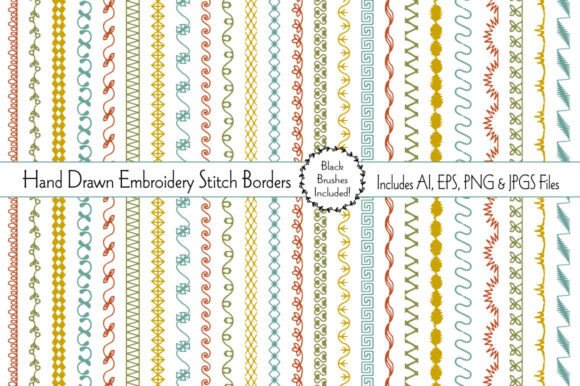
In the evolving landscape of digital design, there is a persistent demand for assets that bridge the gap between traditional craftsmanship and modern efficiency. Hand drawn embroidery stitch borders represent a specific niche within this market, offering designers a way to incorporate the tactile warmth of needlework into digital projects without the time-intensive process of actual stitching or complex vector creation from scratch. This collection, featuring 24 distinct patterns in retro colors, serves as a versatile resource for those looking to add texture and nostalgia to their work. Understanding when and how to utilize these assets requires a clear view of their capabilities, limitations, and how they compare to other design tools available today.
Defining the Asset: What Makes Hand Drawn Stitch Borders Distinct?
At its core, this product is a library of pre-rendered and vector-based border elements that mimic the appearance of hand-embroidered thread. The collection includes 24 different patterns, each designed to replicate the irregularities and organic feel of real stitching. Unlike standard geometric borders found in basic word processors or generic clip art libraries, these borders possess a specific aesthetic characterized by soft, retro color palettes and varied thicknesses. The patterns are 12 units wide, providing substantial visual weight that can frame content effectively without overwhelming it.
The distinct value proposition lies in the hybrid nature of the files provided. Users receive not only raster images (24 JPGs and 24 PNGs with transparent backgrounds) but also editable vector files (2 AI and 2 EPS files). This dual format approach is crucial for professional workflows. The PNGs allow for immediate drag-and-drop usage in applications like Canva, Procreate, or Photoshop, while the AI and EPS files offer infinite scalability and editability in Adobe Illustrator or similar vector software. Furthermore, the inclusion of black brushes in a separate file adds another layer of utility, allowing users to create custom lengths and shapes that go beyond the pre-set border patterns.
Comparing Digital Stitch Assets to Alternative Design Approaches
When evaluating hand drawn embroidery stitch borders, it is helpful to compare them against three common alternatives: stock photography of real embroidery, custom digital illustration, and standard geometric vector borders.
Versus Stock Photography of Real Embroidery
Using high-resolution photographs of actual embroidered fabric provides unparalleled realism. However, this approach comes with significant tradeoffs. Lighting inconsistencies, background removal difficulties, and lack of scalability are major hurdles. A photo of a stitch border cannot be easily recolored to match a specific brand palette without extensive editing, and enlarging it often results in pixelation or loss of detail. In contrast, the vector and high-resolution PNG formats in this collection allow for instant color changes and seamless scaling, making them far more practical for consistent branding and multi-format output.
Versus Custom Digital Illustration
Hiring an illustrator to create custom stitch borders ensures uniqueness but involves higher costs and longer turnaround times. For projects requiring multiple variations or rapid iteration, such as creating a series of Easter cards or a large batch of scrapbook elements, custom illustration may not be cost-effective. This collection offers a middle ground: while the patterns are pre-made, the inclusion of editable brushes and vector files allows for significant customization. Designers can adjust point size, length, and color, achieving a bespoke look without the expense of commissioning original artwork.
Versus Standard Geometric Borders
Standard vector borders are clean and precise but often lack emotional resonance. They can feel sterile or corporate. Hand drawn embroidery stitch borders introduce a human element—the slight imperfections and texture of handwork—that evokes feelings of comfort, nostalgia, and care. This makes them particularly effective for industries focused on wellness, parenting, handmade goods, and seasonal celebrations where a "soft" touch is desirable.
Best-Fit Use Cases and Practical Applications
Understanding the strengths of these assets helps in determining whether they are the right choice for your specific project. The retro color scheme and soft textures make them exceptionally well-suited for certain demographics and occasions.
- Greeting Cards and Invitations: The soft colors are ideal for Easter, baby showers, and spring-themed events. The borders can frame text elegantly, adding a decorative trim that feels personal and thoughtful.
- Branding for Artisan Products: If you are designing logos or packaging for homemade gifts, candles, or baked goods, these stitch borders can reinforce the "handmade" narrative. They signal to customers that care and attention to detail went into the product.
- Digital Scrapbooking and Journaling: For digital planners and scrapbookers, the transparent PNGs are invaluable. They can be layered over photos or paper textures to create depth and interest without obscuring underlying content.
- Web and Social Media Graphics: The borders can be used to create cohesive post templates or website headers. The retro aesthetic aligns well with current trends favoring vintage and nostalgic design elements.
For example, a small business selling organic baby clothes might use these borders on their hang tags and social media posts to visually communicate softness and tradition. Similarly, a wedding invitation designer could use the thinner stitch patterns to create delicate frames for RSVP cards, offering a rustic yet refined look.
Evaluating Limitations and Decision Factors
While versatile, hand drawn embroidery stitch borders are not a universal solution. There are specific scenarios where they may not be the best fit.
Corporate and Tech Branding: If your brand identity relies on sleek, modern, or futuristic aesthetics, the rustic and retro nature of embroidery stitches may clash with your overall message. In such cases, clean geometric lines or minimalist vectors would be more appropriate.
High-Contrast Requirements: The soft, retro colors included in the collection are designed for harmony rather than high impact. If you need borders that stand out aggressively against dark backgrounds or require neon vibrancy, you will need to heavily modify the colors or choose a different asset type. While the files are editable, achieving certain high-contrast effects may require additional design skills.
Complexity of Editing: Although the files are editable, leveraging the full potential of the AI and EPS files requires proficiency with vector software. Users who are only comfortable with basic drag-and-drop tools will be limited to using the PNG and JPG files as-is. The black brushes offer flexibility, but creating custom shapes with them requires a learning curve compared to simply placing a pre-made border.
Technical Considerations for Optimal Use
To get the most out of this collection, it is important to understand the file formats provided. The 24 JPGs are suitable for quick previews or web use where transparency is not required. The 24 PNGs with transparent backgrounds are the workhorses for most digital design tasks, allowing seamless integration into layered compositions. For print projects, especially those requiring large formats like banners or posters, the AI and EPS files are essential. They ensure that the edges of the stitches remain crisp and smooth at any size, avoiding the pixelation that can occur with raster images.
The inclusion of black brushes is a notable feature for advanced users. These brushes can be scaled and colored to create continuous stitch lines that are not limited to the predefined border shapes. This allows for the creation of custom frames, dividers, or decorative accents that fit unique layout requirements. However, this flexibility comes with the responsibility of maintaining consistency in stroke weight and color across your design.
Making the Final Decision
Choosing whether to invest in hand drawn embroidery stitch borders depends on your design needs, technical skills, and brand aesthetic. If you are looking to add a touch of warmth, nostalgia, and handmade charm to your projects, this collection offers a robust and flexible solution. The combination of ready-to-use PNGs and editable vector files provides a balance of convenience and customization that is hard to find in single-format assets.
However, if your work demands ultra-modern minimalism, high-contrast vibrancy, or if you lack the skills to edit vector files, you may find other resources more suitable. Always consider the end use of your design. For baby showers, Easter cards, artisan branding, and scrapbooking, these borders are an excellent choice. For corporate reports or tech startups, they may be less appropriate.
Ultimately, the value of this collection lies in its ability to save time while maintaining a high level of aesthetic quality. By providing multiple formats and editable options, it empowers designers to create professional-looking results without starting from scratch. Whether you are a seasoned graphic designer or a hobbyist crafter, understanding these tradeoffs will help you decide if hand drawn embroidery stitch borders are the right tool for your next creative endeavor.