Watercolor Mixed Flower Collection: A Practical Guide for Designers and Crafters
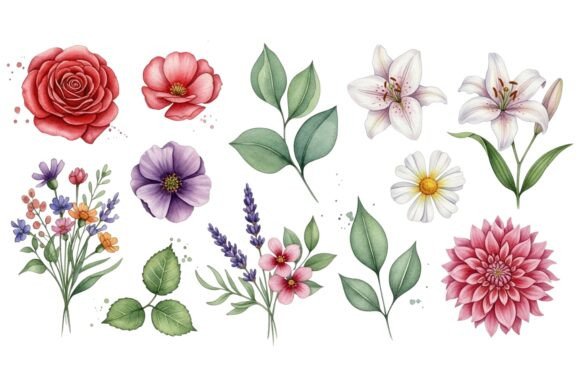
Integrating organic elements into digital and print design requires a delicate balance between aesthetic appeal and technical usability. The Watercolor Mixed Flower Collection emerges as a versatile resource for creators seeking to infuse their projects with the soft, textured charm of hand-painted botanicals. This curated set features a diverse array of flora, including vibrant roses, elegant anemones, charming wildflowers, fragrant lavender, delicate camomile, stately lilies, and rich dahlias. Unlike generic clipart libraries that often rely on flat vectors or low-resolution raster images, this collection bridges the gap between artistic authenticity and modern design flexibility.
For professionals and hobbyists alike, understanding the specific value proposition of this mixed media approach is essential. It is not merely about acquiring pretty images; it is about securing assets that can withstand the rigors of professional printing, scalable web design, and intricate crafting processes. This article evaluates the collection’s components, compares its utility against alternative graphic resources, and helps you determine if this specific floral suite aligns with your creative objectives.
Understanding the Artistic Composition
The core distinction of the Watercolor Mixed Flower Collection lies in its variety and stylistic cohesion. Rather than focusing on a single species or a monochromatic palette, this set captures the natural beauty of various plants, making it particularly suitable for spring and summer designs. The inclusion of both structured blooms like the stately lily and free-form elements like wildflowers allows for dynamic composition. Designers can create balanced arrangements that mimic the unpredictability of nature while maintaining visual harmony.
The hand-drawn nature of these illustrations ensures that each petal and leaf carries unique textural nuances. In digital design, perfection can often feel sterile. Watercolor textures introduce subtle irregularities—bleeds, granulation, and soft edges—that evoke warmth and nostalgia. This emotional resonance is difficult to achieve with standard vector shapes or photographic stock images, which may appear too sharp or commercial for certain branding efforts. The collection’s focus on "mixed" flowers means you are not locked into a单一 thematic constraint, offering greater freedom for eclectic or bohemian design styles.
Technical Formats: EPS, SVG, and PNG Explained
When evaluating digital assets, the file format is often more critical than the visual content. This collection provides three distinct formats: one EPS vector file, one SVG file, and high-quality PNG files with transparent backgrounds. Understanding the tradeoffs between these formats is crucial for maximizing the utility of your purchase.
- EPS (Encapsulated PostScript): This is the industry standard for professional printing. As a vector format, it allows for infinite scalability without loss of quality. If you are designing large-format items such as banners, wedding invitations, or packaging, the EPS file ensures that the delicate watercolor edges remain crisp rather than pixelated. However, EPS files can be larger in size and may require specialized software like Adobe Illustrator to edit effectively.
- SVG (Scalable Vector Graphics): Ideal for web and digital interfaces, SVGs are lightweight and code-based. They render perfectly on any screen resolution, making them perfect for responsive website designs, logos, or digital planners. Unlike raster images, SVGs can be manipulated via CSS, allowing developers to change colors or add animations dynamically. This makes the collection adaptable for modern UI/UX projects where load times and clarity are paramount.
- PNG (Portable Network Graphics): The inclusion of high-quality PNGs with transparent backgrounds offers immediate usability for non-designers or quick mockups. These raster images are ready to drag and drop into applications like Canva, Microsoft Word, or Procreate. While they cannot be scaled up indefinitely without pixelation, their high resolution ensures they look excellent in standard print sizes and social media graphics. The transparency is key, allowing seamless layering over photos, patterns, or colored backgrounds without unsightly white boxes.
Comparing Watercolor Assets to Alternatives
To make an informed decision, it is helpful to compare this collection against other common graphic resources. How does it stack up against photographic stock, flat vector icons, or AI-generated imagery?
Photography vs. Illustration
Photographic flowers offer hyper-realism but often come with lighting and background constraints. Removing a complex flower from its background in Photoshop is time-consuming and often results in unnatural halos. The Watercolor Mixed Flower Collection eliminates this hurdle by providing pre-isolated elements. Furthermore, watercolors offer a stylized interpretation that can soften a design, whereas photography can sometimes feel cold or overly literal. For wedding stationery or lifestyle branding, the illustrative approach often feels more personal and curated.
Flat Vectors vs. Textured Vectors
Standard flat vectors are efficient but lack depth. They are ideal for iconography but may fail to convey the elegance required for premium products. This collection’s vector files retain the watercolor texture, offering the best of both worlds: the scalability of vectors with the artistic depth of traditional media. This is a significant advantage over basic shape-based floral clips, which can look amateurish in high-end contexts.
AI-Generated Images vs. Hand-Drawn Collections
While AI tools can generate unique floral images, they often struggle with consistency and anatomical accuracy. A hand-drawn collection like this ensures that every leaf and petal follows botanical logic, providing a level of reliability that AI currently lacks. Additionally, using a curated set guarantees that all elements share a consistent color palette and brush style, creating a cohesive brand identity that random AI generations might fail to achieve.
Best-Fit Use Cases and Applications
Identifying whether this collection suits your needs depends largely on your project type. Here are several scenarios where these botanical illustrations excel:
- Wedding and Event Stationery: The elegant anemone and vibrant rose are timeless choices for invitations, save-the-dates, and menu cards. The soft watercolor aesthetic aligns perfectly with romantic and rustic themes.
- Product Packaging: Brands selling natural cosmetics, teas, or artisanal soaps can use the lavender and camomile illustrations to reinforce messages of purity and calm. The vector formats allow for precise placement on small labels.
- Digital Planning and Scrapbooking: The PNG files are invaluable for digital planners and scrapbookers. Users can layer the delicate camomile and wildflowers over journal entries to create visually engaging layouts without needing advanced design skills.
- Textile and Surface Design: Fashion designers can utilize the repeating potential of these elements to create fabric prints. The rich dahlia and stately lily provide bold focal points for clothing lines or home decor items like pillowcases and curtains.
Limitations and Considerations
While versatile, the Watercolor Mixed Flower Collection is not a universal solution. Designers working on high-contrast, minimalist, or corporate tech brands may find the soft, organic style clashes with their rigid geometric identities. Additionally, while the vector files are editable, changing the fundamental texture of a watercolor brushstroke requires advanced illustration skills. If you need to drastically alter the color scheme to match a specific neon brand palette, the natural tones of the watercolor may require significant adjustment.
Furthermore, users must respect licensing terms. While these files are ideal for artistic and decorative projects, commercial usage rights should always be verified before incorporating them into products for resale. Understanding these boundaries ensures ethical and legal compliance in your creative workflow.
Making the Right Choice
Choosing the right graphic resource involves balancing aesthetic desire with technical necessity. If your project demands scalability, professional print quality, and a touch of organic elegance, this collection offers a robust solution. The combination of EPS, SVG, and PNG formats ensures that whether you are a web developer, a print designer, or a DIY crafter, you have the appropriate tool for the job.
Ultimately, the Watercolor Mixed Flower Collection serves as a bridge between traditional artistry and digital convenience. It saves time on asset creation while providing a level of sophistication that elevates standard design templates. By evaluating your specific format needs and stylistic goals, you can determine if this botanical suite is the ideal foundation for your next creative endeavor.