Continuous Line Heart Design Guide
In the realm of visual communication, simplicity often carries the most weight. The Continuous Line Design of Heart represents a perfect intersection of minimalism and emotional resonance. This artistic approach, characterized by an unbroken stroke that forms the iconic cardiac shape, has transcended its origins in sketching to become a staple in modern branding, digital media, and personal expression. For professionals, creators, and entrepreneurs, understanding the utility and aesthetic power of this design element is not merely about appreciating art; it is about leveraging a versatile tool that enhances clarity and engagement.
Unlike complex illustrations that demand significant cognitive load from the viewer, a single-line decorative element drawn on white space invites immediate comprehension. It strips away the unnecessary, leaving only the essential form. This efficiency is crucial in today’s fast-paced digital environment, where attention spans are short and visual clutter is high. Whether you are designing a website header, crafting a social media post, or developing a brand identity, the continuous line heart offers a sophisticated solution that communicates warmth and connectivity without overwhelming the audience.
The Strategic Value of Minimalist Aesthetics
The primary advantage of utilizing a Continuous Line Design of Heart lies in its adaptability. Because the design relies on a single, fluid path, it scales exceptionally well across various mediums. From the tiny favicon on a browser tab to large-format print materials, the integrity of the line remains intact. This scalability is a significant time-saver for designers and marketers who need to maintain consistency across multiple platforms without redrawing or heavily modifying assets.
Consider the practical application in user interface (UI) design. When integrating icons for "favorites," "likes," or health-related features, a complex graphic can appear muddy at smaller sizes. In contrast, the clean lines of a continuous heart design remain crisp and recognizable. This clarity improves user experience by reducing ambiguity. Users instantly recognize the symbol’s intent, which streamlines navigation and interaction. For educators and publishers, this means that instructional materials can convey concepts of care, biology, or emotion more effectively, ensuring that the visual aid supports rather than distracts from the textual content.
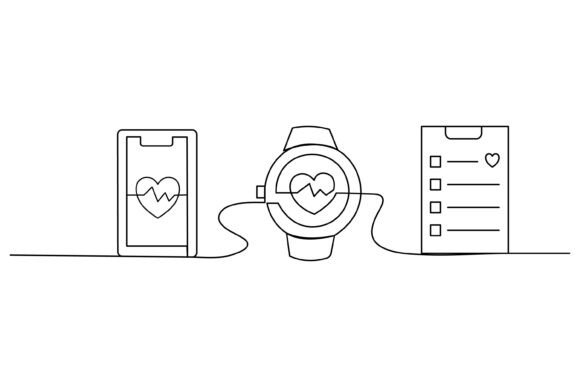
Furthermore, the aesthetic of the single line evokes a sense of movement and continuity. This is particularly relevant when discussing the Continuous line design of heart rate monitoring. In health and wellness contexts, the heartbeat is not a static object but a dynamic rhythm. A continuous line mimics the electrocardiogram (ECG) pulse, creating a subtle yet powerful visual metaphor for life, vitality, and monitoring. By using this design style, healthcare apps, fitness brands, and wellness bloggers can align their visual identity with the functional reality of their services. It bridges the gap between abstract art and functional data visualization, making health metrics feel more approachable and less clinical.
Versatility Across Professional Use Cases
The utility of this design extends far beyond healthcare. For small business owners and entrepreneurs, particularly those in lifestyle, coaching, or creative industries, the continuous heart serves as a versatile branding element. It conveys professionalism while maintaining a human touch. Unlike generic stock imagery, a well-crafted single-line element can be customized to fit specific brand colors and layouts, offering a unique visual signature.
- Brand Identity: Use the SVG format to integrate the heart into logos or letterheads, ensuring vector quality for print.
- Digital Marketing: Employ the JPG version for social media graphics where quick loading times and clear visuals are prioritized.
- Product Design: Apply the EPS file for merchandise such as tote bags, mugs, or apparel, allowing for high-resolution printing on various textures.
Freelancers and hobbyists also benefit significantly from having access to high-quality vector files. The ability to manipulate the anchor points in an SVG or EPS file allows for custom modifications. You might extend the line to incorporate text, loop it into a monogram, or adjust the thickness to match a specific design theme. This level of control empowers non-designers to create professional-looking materials without needing advanced illustration skills. It simplifies the decision-making process in design projects, providing a solid foundation that can be built upon or used as-is.
Technical Formats and Practical Implementation
When acquiring a Continuous Line Design of Heart, understanding the file formats is essential for maximizing its value. Typically, you will receive three key formats: EPS, SVG, and JPG. Each serves a distinct purpose in your workflow.
The SVG (Scalable Vector Graphics) format is arguably the most valuable for web-based projects. As a vector format, it uses mathematical paths rather than pixels, meaning it can be scaled to any size without losing quality. For web developers and bloggers, SVGs are lightweight, improving page load speeds—a critical factor for SEO and user retention. Additionally, SVG code can be styled directly with CSS, allowing you to change the color of the heart line dynamically based on user interactions or theme settings. This interactivity adds a layer of sophistication to digital presentations.
The EPS (Encapsulated PostScript) file is the standard for professional printing. If you are a publisher or a small business owner creating physical marketing materials, brochures, or packaging, the EPS format ensures that the edges of your heart design remain sharp and clean, regardless of the print size. It is compatible with industry-standard software like Adobe Illustrator and CorelDRAW, making it easy for professional designers to integrate the element into larger compositions.
Finally, the JPG (Joint Photographic Experts Group) format provides a ready-to-use raster image. This is ideal for quick implementations where editing is not required, such as inserting the image into a Word document, a PowerPoint presentation, or an email newsletter. While it does not offer the scalability of vector formats, it is universally supported and easy to handle for users who may not have access to specialized design software.
Navigating Limitations and Design Fit
While the continuous line heart is highly versatile, it is not a one-size-fits-all solution. Its minimalist nature means it may lack the visual impact required for bold, high-energy campaigns that rely on vibrant, complex imagery. In situations where the goal is to evoke intense excitement or chaos, a simple line drawing might appear too subdued. Therefore, it is crucial to assess the emotional tone of your project. If the objective is to convey calm, trust, elegance, or clarity, this design excels. If the goal is aggression or high-volume noise, other visual strategies may be more appropriate.
Additionally, when using the Continuous line design of heart rate monitoring concept, ensure that the abstraction does not compromise accuracy. In medical or scientific contexts, the stylized line should not be mistaken for actual diagnostic data. It is best used as a symbolic representation rather than a factual graph. Clear labeling and context are necessary to prevent misinterpretation, especially in educational or healthcare settings where precision is paramount.
Enhancing Creativity and Efficiency
Ultimately, incorporating a Continuous Line Design of Heart into your creative toolkit is about enhancing efficiency without sacrificing quality. It allows you to bypass the time-consuming process of creating custom illustrations from scratch. Instead, you start with a polished, professional asset that aligns with contemporary design trends. This frees up resources to focus on strategy, content creation, and audience engagement.
For marketers and content creators, this efficiency translates to faster turnaround times for campaigns. For educators, it means clearer, more engaging visual aids. For entrepreneurs, it offers a cost-effective way to elevate brand aesthetics. By choosing a design that is both timeless and modern, you invest in a visual asset that will remain relevant as design trends evolve. The single line, drawn on white, is not just a decoration; it is a strategic choice that supports clear communication, strengthens brand identity, and simplifies the creative process.
In conclusion, the value of this design lies in its balance of form and function. It is a tool that respects the viewer’s intelligence by offering clarity, while respecting the creator’s time by offering versatility. Whether you are monitoring heart rates in a health app or expressing love in a wedding invitation, the continuous line heart provides a refined, effective solution that meets the diverse needs of modern professionals and creators.