Mastering the Continuous Line Cake: A Guide to Minimalist Digital Art
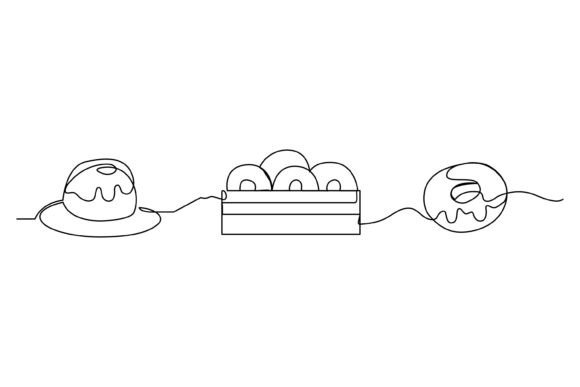
In the evolving landscape of digital design and culinary aesthetics, few trends have captured the imagination quite like the Continuous Line Cake. This artistic approach merges the elegance of minimalist illustration with the celebratory nature of confectionery. For designers, bakers, and creative entrepreneurs, understanding this style is not merely about following a trend; it is about mastering a versatile visual language that communicates sophistication through simplicity. The core concept involves creating a decorative element using a single, unbroken line drawn on a white background, resulting in a clean, modern aesthetic that translates beautifully across various media.
Understanding the Appeal of Single-Line Aesthetics
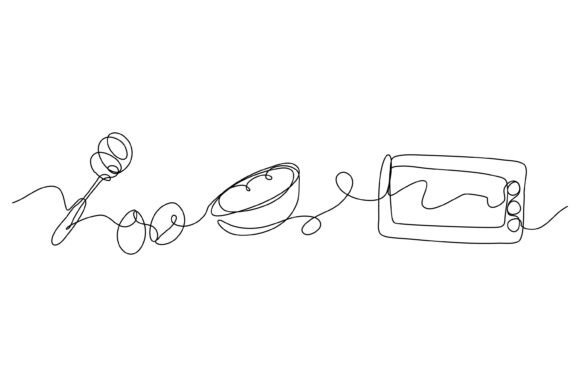
The Continuous Line Cake represents a shift away from hyper-realistic, cluttered designs toward something more abstract and interpretive. In a world saturated with visual noise, consumers are increasingly drawn to clean, whitespace-heavy designs that offer a sense of calm and clarity. This style leverages the power of suggestion rather than explicit detail. By reducing a complex object like a cake to its essential contours using one continuous stroke, the artist invites the viewer to complete the image mentally. This engagement creates a deeper connection with the artwork.
For professionals, the challenge often lies in balancing simplicity with recognizability. How does one convey the layers, texture, and joy of a cake without lifting the pen? The answer lies in strategic looping and curvature. The Continuous Line Cake is not just a drawing; it is a puzzle solved in real-time. This makes it an excellent subject for logos, branding elements, and decorative prints where uniqueness and memorability are paramount.
Practical Applications for Designers and Bakers
The versatility of the Continuous Line Cake extends far beyond simple illustration. Its primary strength is adaptability. Because the design is typically rendered as a single line on a white background, it serves as a perfect foundational asset for numerous practical applications.
- Branding and Logos: Bakeries and patisseries can use this motif to create sophisticated logos that look equally good on storefront signage and social media avatars. The minimalism ensures scalability without loss of quality.
- Packaging Design: When printed on boxes, bags, or wrapping paper, the single-line aesthetic adds a touch of luxury. It pairs exceptionally well with kraft paper, pastel colors, or stark white minimalism.
- Digital Content: For food bloggers and influencers, incorporating a Continuous Line Cake into watermarks or intro graphics provides a cohesive visual identity that stands out in crowded feeds.
- Physical Decor: The design translates seamlessly to physical products such as enamel pins, ceramic mugs, and textile prints for aprons or tea towels.
By utilizing file formats such as EPS, SVG, and JPG, users can ensure that their assets are ready for any medium. The vector formats (EPS and SVG) allow for infinite scaling, crucial for large-format printing, while the JPG offers a quick, ready-to-use raster image for web and social media applications.
Overcoming Common Design Challenges
While the end result appears effortless, creating an effective Continuous Line Cake requires careful planning. One common challenge is maintaining flow. If the line becomes too convoluted, the image loses its elegance and becomes difficult to decipher. Conversely, if the line is too simple, it may fail to evoke the subject matter. The goal is to find the "sweet spot" where the abstraction is recognizable yet stylish.
Another consideration is negative space. In single-line art, what is not drawn is just as important as what is. The white background is an active participant in the composition. Designers must ensure that the loops and curves of the line create balanced pockets of white space, preventing the design from feeling lopsided or heavy on one side. This balance is critical when the image is used as a central focal point on a website or a product label.
Technical Considerations and File Formats
To fully leverage the potential of a Continuous Line Cake asset, understanding the technical specifications is essential. When you acquire or create these designs, you will typically encounter three main file types, each serving a distinct purpose in your workflow.
SVG (Scalable Vector Graphics): This is the preferred format for web developers and UI designers. SVGs are code-based, meaning they load quickly and remain crisp at any size. They are ideal for responsive websites where the logo or icon needs to adjust to different screen sizes without pixelation.
EPS (Encapsulated PostScript): This is the industry standard for professional printing. If you are sending your Continuous Line Cake design to a printer for business cards, brochures, or large banners, EPS is the safest choice. It preserves the vector data, allowing printers to manipulate colors and sizes without degrading the image quality.
JPG (Joint Photographic Experts Group): While not scalable, JPGs are universally compatible. They are perfect for immediate use in documents, social media posts, or email signatures where vector editing is not required. Having a high-resolution JPG ensures you have a quick-access version of your asset for everyday tasks.
Tailoring the Approach to Your Needs
Different users will approach the Continuous Line Cake with varying objectives. For a home baker starting a small business, the focus might be on cost-effective branding. Using a pre-made single-line design allows them to achieve a high-end look without the expense of hiring a custom illustrator. They can easily integrate the SVG or JPG into free design tools to create labels and menus.
For established graphic designers, the Continuous Line Cake serves as a modular element. It can be combined with typography, other illustrative motifs, or color blocks to create complex compositions. These professionals might prioritize the EPS file, importing it into software like Adobe Illustrator to tweak anchor points, adjust line weight, or animate the line for digital motion graphics.
Educators and workshop leaders may also find value in this style. Teaching the technique of continuous line drawing helps students improve hand-eye coordination and understand form and structure. Providing students with templates or examples of a Continuous Line Cake can serve as an excellent starting point for lessons on minimalism and abstraction.
Implementation Strategies for Maximum Impact
To get the most out of your Continuous Line Cake assets, consider the context in which they will be viewed. On digital screens, thinner lines often appear more elegant, but they must remain visible on smaller mobile devices. Test your SVG or JPG at various sizes to ensure legibility. For print, consider the ink coverage. A single black line on white paper is cost-effective and striking, but adding a brand color can enhance recognition. However, remember that the charm of this style lies in its restraint; avoid over-coloring or adding unnecessary shadows.
Furthermore, consistency is key. If you choose a Continuous Line Cake for your branding, ensure that other graphical elements follow a similar minimalist philosophy. Mixing hyper-realistic photos with ultra-minimalist line art can create visual dissonance unless handled with extreme care. Instead, pair the line art with clean sans-serif typography and ample whitespace to reinforce the modern, sophisticated vibe.
Conclusion
The Continuous Line Cake is more than a fleeting design trend; it is a testament to the power of reduction. By stripping away the non-essential, this style highlights the beauty of form and flow. Whether you are a designer looking for versatile assets, a baker aiming to elevate your brand, or a creative enthusiast exploring new techniques, embracing this minimalist approach offers significant rewards. With the right files—EPS, SVG, and JPG—in hand, you are equipped to implement this elegant aesthetic across a wide range of platforms and products. The result is a visual identity that is not only contemporary and chic but also deeply engaging, proving that sometimes, less truly is more.